
At Fortitude School, we recognise that children may join us with a wide range of speech, language and communication needs. Some children may have limited verbal communication, find it difficult to express their needs or emotions, or need additional support to understand and use spoken language.
Our provision is designed for children who have the capacity to develop their communication skills with the right specialist support, consistent approaches and opportunities to practise these skills throughout the school day.
Guided by our values of Courage, Compassion and Commitment, we provide a nurturing and supportive environment where children are encouraged to communicate, develop confidence and become increasingly independent.
Developing Functional Communication
Communication support is individualised according to each child’s needs and EHCP outcomes.
Working alongside Speech and Language Therapy advice where appropriate, staff use a range of strategies to help children develop their understanding and expressive communication.
These may include:
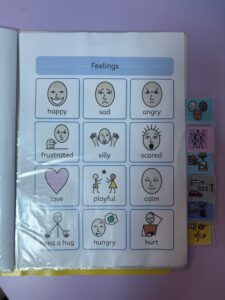
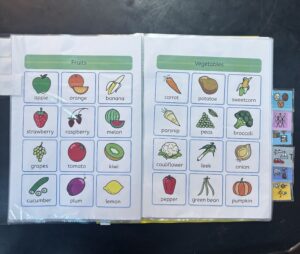
- Symbols, pictures and visual communication tools
- Communication books where appropriate
- Modelling and extending spoken language
- Supporting children to make choices and express their needs
- Developing emotional vocabulary
- Giving additional processing time
- Using clear, simple and consistent language
- Providing structured opportunities for interaction and conversation
Visual and alternative communication strategies are used to support the development of communication and spoken language, rather than as a separate approach to learning.
Visual Supports and Predictable Routines
Many of our children benefit from visual information alongside spoken language.
Across school, we may use:
- Widgit symbols
- “Now and Next” boards
- Visual timetables
- Visual countdowns and timers
- Picture-based routines
- Choice boards
- Individual prompts and communication resources
These approaches can help children understand what is happening, process instructions, manage transitions and communicate more successfully.
Clear routines and predictable expectations can also reduce anxiety, allowing children to feel safer and more able to engage with adults, their peers and learning.
Building Communication Throughout the School Day
Communication development does not happen only during a specific intervention.
Staff look for opportunities throughout the school day to develop children’s communication through learning, play, social interaction, mealtimes, outdoor learning and our wider curriculum.
For children with limited verbal communication, our aim is to build confidence and gradually increase their ability to communicate their thoughts, choices, feelings and needs.
Working With Families
We recognise the importance of children experiencing consistent communication approaches at home and at school.
Where appropriate, we work with parents and carers to share strategies and resources that can be used across both environments. This may include visual supports, communication strategies and approaches recommended by Speech and Language Therapy.
This consistency can help children generalise their developing communication skills and become increasingly confident and independent.
Our Admissions Profile
Fortitude School is not currently commissioned as a specialist provision for children who are non-verbal and require a predominantly alternative or augmentative communication approach.
We can, however, support children who have limited verbal communication or significant speech, language and communication needs where assessment indicates that they have the capacity to develop functional spoken communication within our provision.
As with all referrals, we carefully consider the individual child’s EHCP, presenting needs, developmental profile and required provision to determine whether Fortitude School can appropriately and safely meet their needs.
Helping Children Find Their Voice
Our aim is to help every child develop the communication skills they need to participate in learning, build relationships and become increasingly independent.
When children are able to communicate more effectively, they are better able to:
- Express their needs and feelings
- Make meaningful choices
- Develop positive relationships
- Participate in learning
- Manage frustration and anxiety
- Build confidence and independence
At Fortitude School, communication is embedded throughout our provision. We work with each child from their individual starting point, helping them develop the skills and confidence to communicate successfully.


